

The Rise of Everyday Luxury: Why Truffle Is Not Just For Fine Dining
The Rise of Everyday Luxury: Why Truffle Is Not Just For Fine Dining
Twenty years ago, the average British diner was unlikely to encounter a truffle unless they were sitting down to a very expensive meal at a very serious restaurant. Truffle lived behind glass, so to speak: shaved tableside by a waiter in a starched apron, priced by the gram, discussed reverently by chefs who used it as a kind of edible currency. To eat truffle at all was to be, briefly, in the presence of the culinary elite.
Something rather quiet has happened since. Today, in London, you can order a truffle mac and cheese at Honest Burgers, buy a jar of truffle mayo in your local Sainsbury’s, and sprinkle truffle dust over the popcorn on your sofa on a Tuesday night. The most expensive ingredient in Western cooking has, gently and without much fanfare, become a fixture of everyday life. This is not a dilution of truffle. It is one of the most interesting shifts in food culture of the last decade, and it is worth understanding why it happened and where it is going.
The old world of truffle
For most of its modern history, truffle was a status ingredient. Its use in restaurants was intentionally theatrical: the small brown lump produced from a covered dish, weighed at the table, the mechanical grater turning, a small pile of shavings falling onto pasta or eggs. The performance was part of the point. Truffle was a signifier that the diner was somewhere special, ordering something rare, spending money accordingly.
There were reasons this made sense. Fresh truffle was, and still is, genuinely scarce, expensive, and short-lived, and the infrastructure needed to source and use it well existed almost exclusively in high-end kitchens. For a home cook, buying and using a fresh Alba truffle was closer to a project than a recipe.
What changed
Three shifts, all of them accelerating in the last ten years or so.
The first is culinary democratisation. Casual restaurants, particularly the wave of upmarket burger and pizza chains that emerged in the 2010s, discovered that a small truffle flourish (a smear of truffle mayo, a drizzle of truffle oil, a shower of truffle dust on chips) could transform a familiar dish into something Instagrammable and premium without meaningfully changing the price. Truffle came down off the tasting-menu shelf and onto burger menus, brunch specials and pub blackboards. Once it was there, the reverence around it began to soften.
The second is the everyday-luxury movement. Consumers, particularly under 40, have quietly redrawn where they spend money on food. Fewer are willing to save up for a single blow-out meal a month; more are willing to spend a little more on small daily pleasures. A £13 jar of truffle dust that upgrades twenty ordinary dinners is, for that mindset, a very rational purchase. It is the same logic that put good olive oil, sea salt flakes and small-batch chocolate into home kitchens. Truffle simply arrived slightly later to the party.
The third is product innovation. Modern truffle condiments (oils, dusts, mayos, sauces, minced-truffle jars) capture the aromatic compounds that give truffle its magic while removing the perishability and much of the cost. Where a fresh truffle lasts a week, a well-made jar of truffle product lasts many months. This changed everything. Truffle stopped being an event and started being an ingredient.
What the new world of truffle looks like
You now see truffle in places nobody would have expected it a decade ago. In fast-casual burger and pizza chains. On supermarket cheese boards. In gift shops as a mid-range gift set. In home cupboards next to Maldon salt and good vinegar. On the wedding-registry list of couples in their thirties. In the Sunday-morning fry-up of someone who wanted to feel a little bit special.
None of this is a fall from grace. Truffle in a fine-dining setting is still one of the great gastronomic experiences a person can have. What has changed is that this is no longer the only truffle experience available. There is now a whole other layer, a democratic one, where truffle sits alongside the daily rituals of eating well.
Why this is a good thing
There is a certain sort of gastronomic purist who will argue that truffle on a burger cheapens the ingredient. The evidence, gently, disagrees. Making truffle more accessible has not diluted the demand for the fresh, expensive kind; prices for genuine Alba white truffle are, if anything, still rising. What it has done is introduce truffle to millions of people who would never have tried it otherwise, and expanded the number of ways it can be enjoyed.
It has also given home cooks, for the first time in the ingredient’s history, permission to experiment. Truffle is no longer a thing you have to book a table to encounter. It is a thing you can add to your Tuesday-night pasta and see what happens. That is a democratic revolution disguised as a jar of condiment.
The whole point of an everyday luxury
An everyday luxury is not a lesser luxury. It is a luxury you have chosen to live with, rather than one you have to travel to visit. It is the good linen sheet you sleep on every night, the proper coffee you make every morning, the truffle dust you shake over Sunday’s eggs. Its power is that it accumulates, quietly, in the background of a normal life, until eating well becomes a habit rather than an occasion.
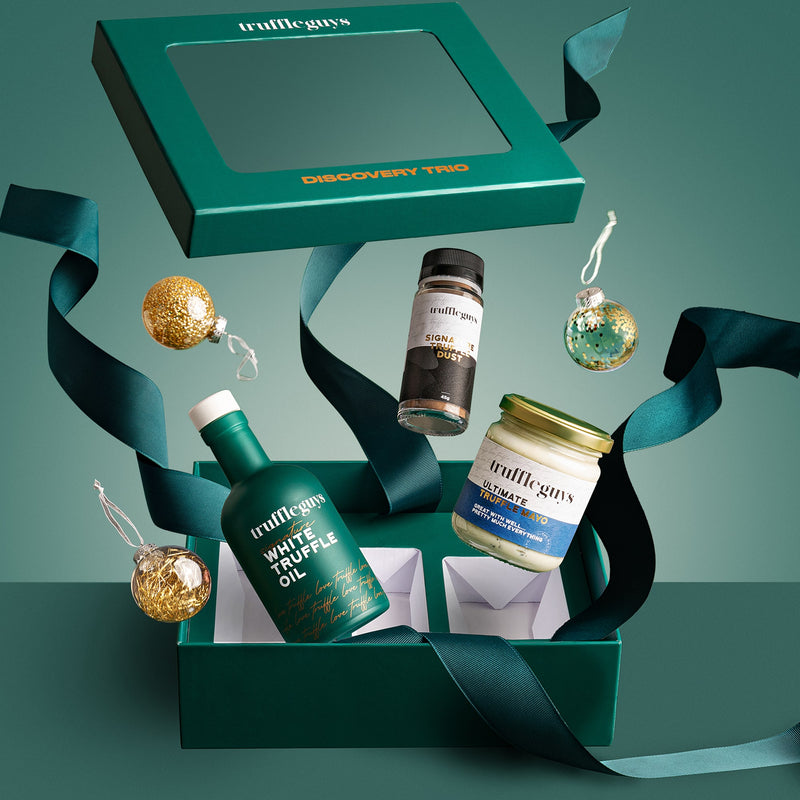
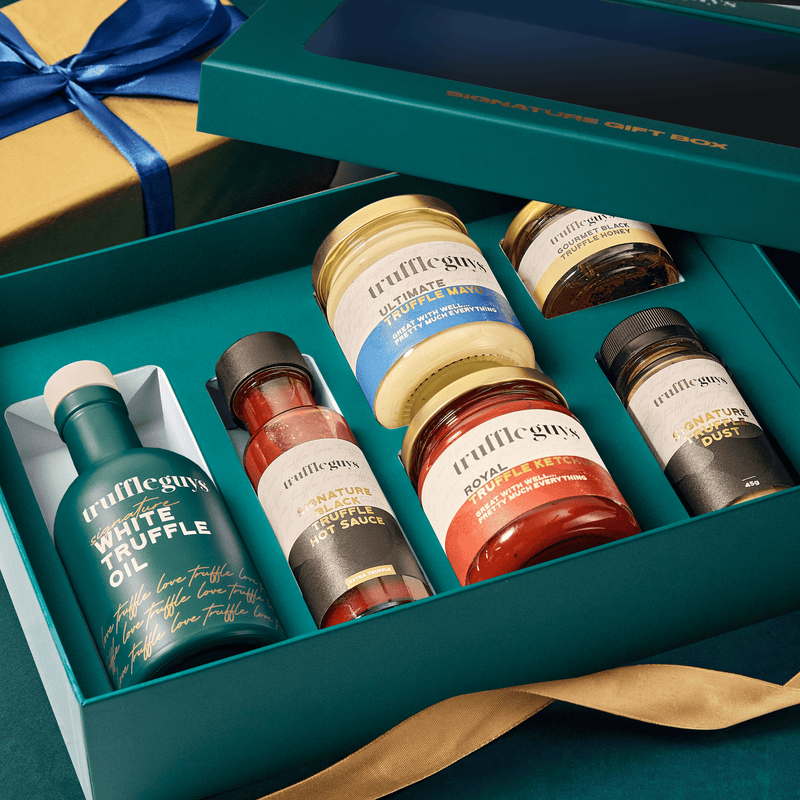
That is the whole point of what we do. Products like our Signature Truffle Dust, White Truffle Oil and Ultimate Truffle Mayo exist to make truffle a Tuesday-night ingredient, not a Michelin-star spectacle. The Truffle Starter Pack is the tidiest way to make that shift in your own kitchen.
The luxury is not what you eat once. It is what you eat every week. Which is why truffle, quietly, is exactly where it belongs.