

Why Truffles Are So Expensive (And Whether They’re Worth It)
Why Truffles Are So Expensive (And Whether They’re Worth It)
At four o’clock on a damp November morning in the hills above Alba, a man in a long oilskin steps out of a battered Fiat with a dog at his heel. The dog, usually a Lagotto Romagnolo, a curly-coated breed prized for its nose, already knows where it’s going. The two of them vanish into a stand of oak and hazel under a moon that hasn’t yet clocked off. They’ll work for three hours. If they’re lucky, they’ll come home with a single tuber the size of a golf ball: muddy, fragrant, and worth somewhere between £200 and £600.
That, more or less, is how the world’s most expensive culinary ingredient arrives in your kitchen, and it explains, almost by itself, why truffles cost what they cost. This isn’t a number invented by marketing. It’s a number dictated by the fact that truffles are, agriculturally speaking, very nearly impossible.
You can’t really farm a truffle
A truffle is the fruiting body of an underground fungus, and almost nothing about it is convenient. It can’t be cultivated the way mushrooms are. Truffles grow only in symbiosis with the roots of specific trees, oak, hazel, beech, lime, in particular soils, particular climates, particular rainfall. Italian growers have spent decades trying to farm white truffle (Tuber magnatum) and have, so far, mostly failed. Black truffle (Tuber melanosporum) can be coaxed into inoculated orchards in the Périgord, Umbria, even parts of Australia, but yields are erratic, and one hot summer or dry autumn can wipe out an entire harvest.
Even where it works, the truffle is invisible. It grows six to twelve inches underground with no sign above the surface. It can’t be spotted, scheduled or simply picked; it has to be sniffed out, one at a time, by a trained dog (historically a pig in France, until the pigs kept eating the profits) working alongside a hunter, a trifolau, who guards the location of his best trees with the discretion of a man who has, frankly, seen things.
The season is unforgivingly short
White truffles run for roughly ten weeks: October to early December. Italian black winter truffles, November to March. Less aromatic summer truffles fill the gap from May to August. Outside those windows, fresh truffle simply doesn’t exist, there’s no greenhouse version, no off-season import.
And once unearthed, a truffle has perhaps a week of useful aromatic life before those volatile compounds, the very thing you’re paying for, begin to drift away. This is why fresh truffles travel buried in rice or eggs (which greedily soak up the perfume, a delicious side effect), why they’re couriered around like organ transplants, and why the journey from forest floor to dinner plate is measured in days, not weeks.
The economics, in plain terms
What you’re paying for, in any fresh truffle, is this: a wild product no one has managed to fully domesticate; a harvest gathered one tuber at a time by a person and a dog on pre-dawn shifts in cold woodland; a season measured in weeks; a shelf life measured in days; and a global appetite, Asia and the Middle East especially, that has grown faster than supply.
In a normal year, wholesale runs £200–£1,500 per kilo for black truffles and £3,000–£6,000 for white. A poor harvest, like the infamous 2017 Italian season, has pushed white truffle past £8,000. The largest white truffle on record, a 1.5kg giant unearthed in 2010, sold at auction in Macau for the equivalent of £210,000. (For the full breakdown, we’ve written about truffle economics in more detail.) For scale: a £200 truffle, used well, garnishes maybe eight to ten dishes before it fades, £20-odd a plate, just for the finishing flourish. Now you know where the £42 menu price comes from.
So, are they worth it?
This is the more interesting question, and the honest answer is: it depends entirely on what you’re eating, and where.
A fresh white truffle shaved tableside over hand-rolled tajarin in Alba in November is one of the great gastronomic experiences a person can have. Do it once, if you can; take the photo. A half-gram shaved over a scallop on a London tasting menu in February is a harder sell, there, you’re paying for the idea of truffle as much as the truffle itself.
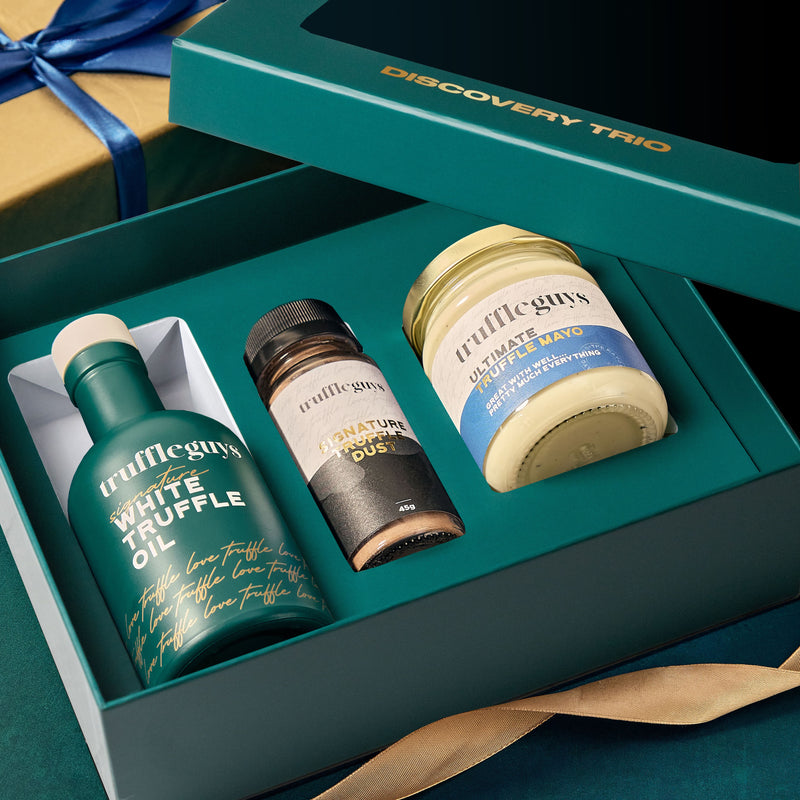
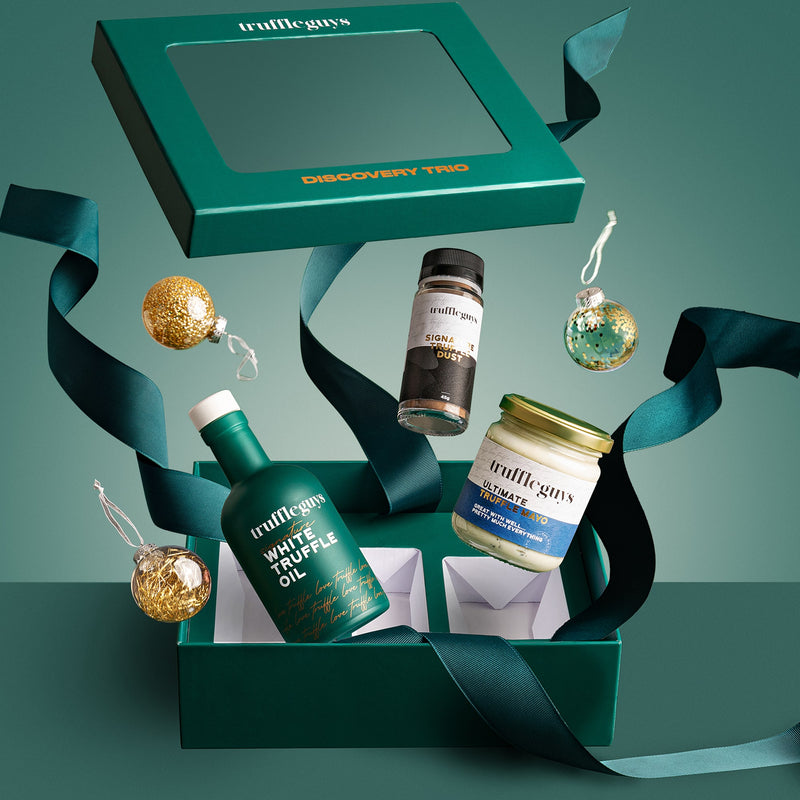
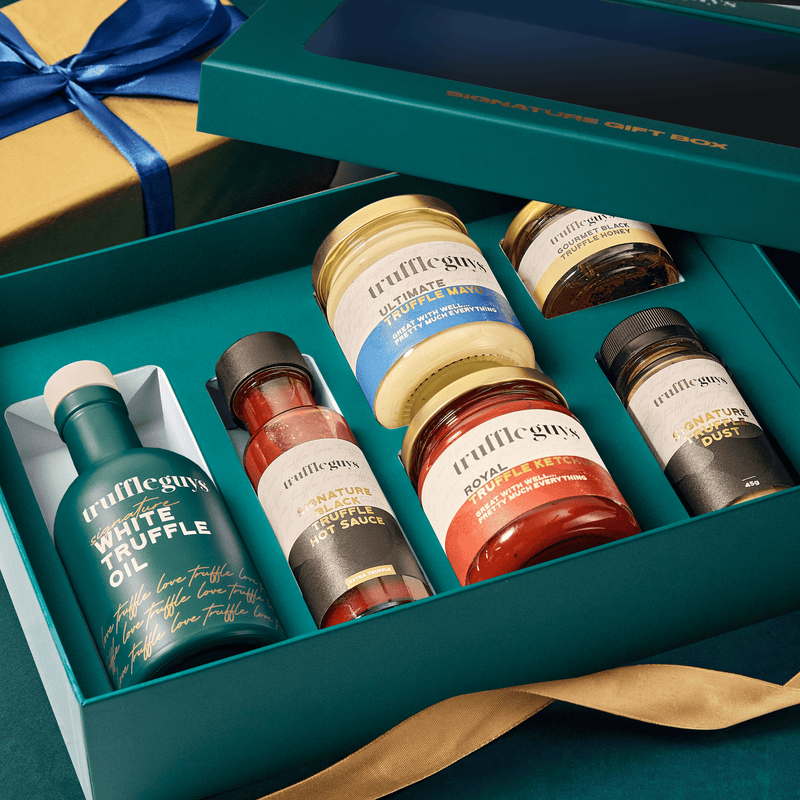
For everyday cooking, the smarter move is to skip fresh truffle altogether and reach for products that capture the aromatic compounds, the part you’re actually paying for, in a far more durable form. A well-made bottle of White Truffle Oil, under twenty pounds, will season fifty bowls of pasta and never spoil. A jar of Signature Truffle Dust at £12.95 will outlive any fresh truffle roughly a hundred times over. The Truffle Starter Pack turns chips, eggs, pasta, popcorn and sandwiches luxurious for less than the cost of a single decent shaving in a restaurant.
The romance of fresh truffle is real, and worth indulging once. But the everyday pleasure of it, buttery toast on a slow Sunday, a weeknight pasta that tastes like a soft brag, a bowl of popcorn that suddenly tastes expensive, is something else entirely, and mercifully much cheaper. That’s the truffle trade’s best-kept secret: you don’t need to be rich to eat well. You just need to know what you’re paying for.