

What Does Truffle Actually Taste Like? (And Why It’s So Addictive)
What Does Truffle Actually Taste Like? (And Why It’s So Addictive)
The first time you smell a real truffle, the brain does something faintly comic. There’s a half-second of confusion, a scramble through your memory for a reference that isn’t there, and then, more often than not, you laugh. It’s the laughter of recognition and mild scandal at once. The truffle smells like nothing you can name and several things you can: damp earth after rain, the inside of a wine cellar, a slightly sweaty shirt, a bowl of garlic left in butter overnight. It is sensual in the literal sense, and somehow instantly familiar. Congratulations, you’ve just met the most quietly destabilising ingredient in food.
To understand what truffle tastes like, you have to start with an inconvenient truth: the tongue does almost none of the work. Most of the experience, the heady, lingering, faintly indecent part, is aroma, smuggled in through the back of the throat while you chew (the technical term, retronasal olfaction, is far less fun than the sensation). This is also why a deep sniff of a freshly grated truffle, before a single bite, accounts for most of the pleasure to come. The sniffing, truly, is half the meal.
The vocabulary of a haunting
Wine writers and chefs have spent a century trying to pin truffle down, and the resulting language tends toward the rapturous. The descriptors that recur, from Piedmont to Périgord, are: musk, garlic, forest floor, wet stone, hazelnut, aged parmesan, autumn leaves, brioche dough, and, almost universally, something undefinably animal. One Italian food writer of the 1980s called it “the perfume of someone you used to know.” It’s a little much. It’s also exactly right.
These aren’t menu flourishes. They’re chemistry. Truffles produce a cocktail of volatile compounds, dimethyl sulphide, bis(methylthio)methane, androstenone, ethyl methylbutyrate, dozens more, that overlap with the molecules in garlic, parmesan, beer fermentation, hazelnuts and, yes, mammalian sweat. Smell a truffle and you’re smelling something the human brain has been trained, by deep evolutionary habit, to read as food and pheromone at the same time. No wonder it short-circuits you.
White versus black: two entirely different moods
The two great culinary truffles taste recognisably different, and it’s worth knowing which is which before you spend a small fortune.
White truffle (Tuber magnatum, the Alba truffle) is the loud one, sharp, pungent, garlicky, with a high, almost cheesy top note. It’s rarely cooked; instead it’s shaved raw at the table, where it explodes into the air over a warm dish in seconds. It’s also more expensive, more seasonal (October to December), and altogether more theatrical.
Black truffle (most often Tuber melanosporum, the Périgord, or Tuber aestivum, the summer truffle) is the grounded one, earthier and deeper, with notes of cocoa, mushroom, hazelnut and damp moss. It stands up to gentle warmth, which is why it turns up in butter, in cream sauces, in scrambled eggs, and in jarred pleasures like Ultimate Truffle Mayo and the Ultimate Truffle Pasta Sauce.
If white truffle is a soprano in a cathedral, black truffle is a baritone in a leather armchair. Most people fall for the baritone first. White truffle is for once you’ve already been recruited.
Why it won’t leave you alone
“Addictive” does a lot of heavy lifting in food marketing, but truffle has genuine neurological cheek. Several of its compounds, androstenone especially, are structurally close to mammalian pheromones, chemicals the conscious nose barely registers but the limbic brain (the ancient, moody, snacks-and-feelings part) notices anyway. Researchers at the Max Planck Institute, among others, have found that truffle taps the same olfactory circuitry as musk and certain ripe cheeses: old, mostly pleasant, slightly destabilising. Your brain decides truffle is interesting before you’ve consciously tasted it; by the time the flavour arrives, you’re already half in love.
There’s a less mystical reason, too. Truffle is rare, expensive and fleeting, and the brain assigns outsized value to flavours that arrive with that résumé. You’re tasting the truffle and the idea of the truffle at once. Both, it turns out, are real.
Where to begin, if you never have
The good news: you don’t need a fresh Alba truffle to find out what truffle tastes like. The aromatic compounds, the part you’re actually chasing, capture beautifully in oils, sauces and dusts, at a fraction of the price.
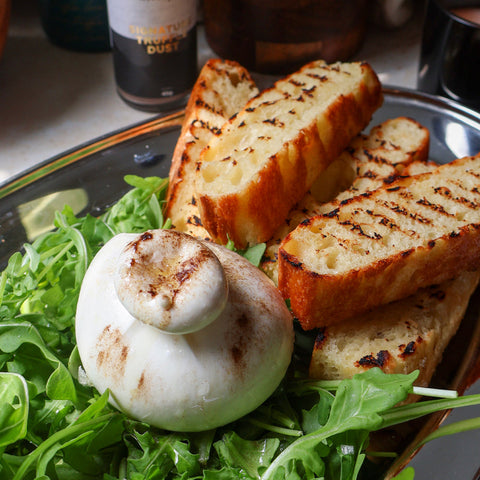
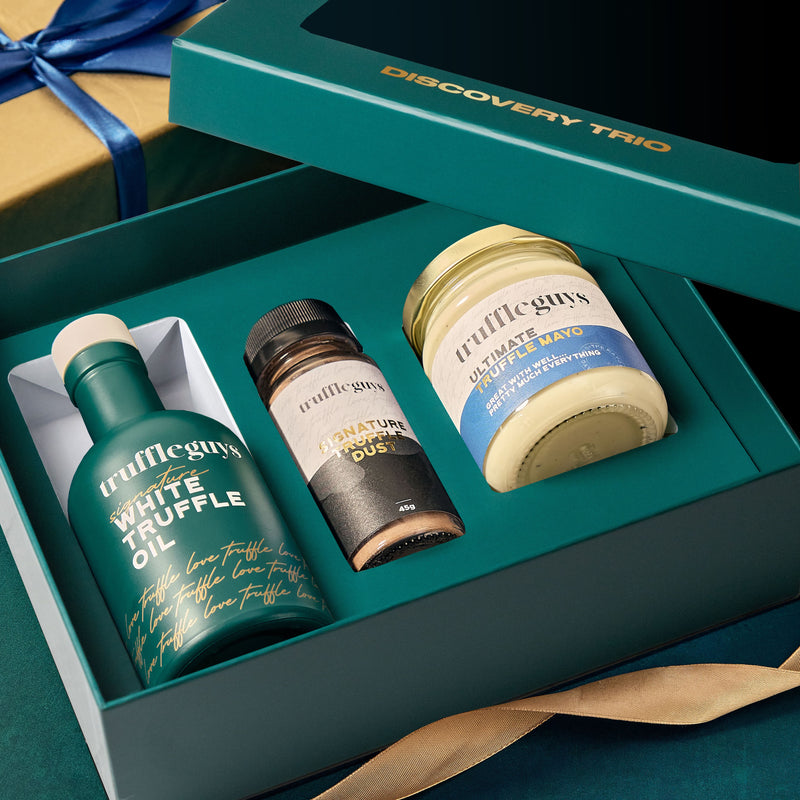
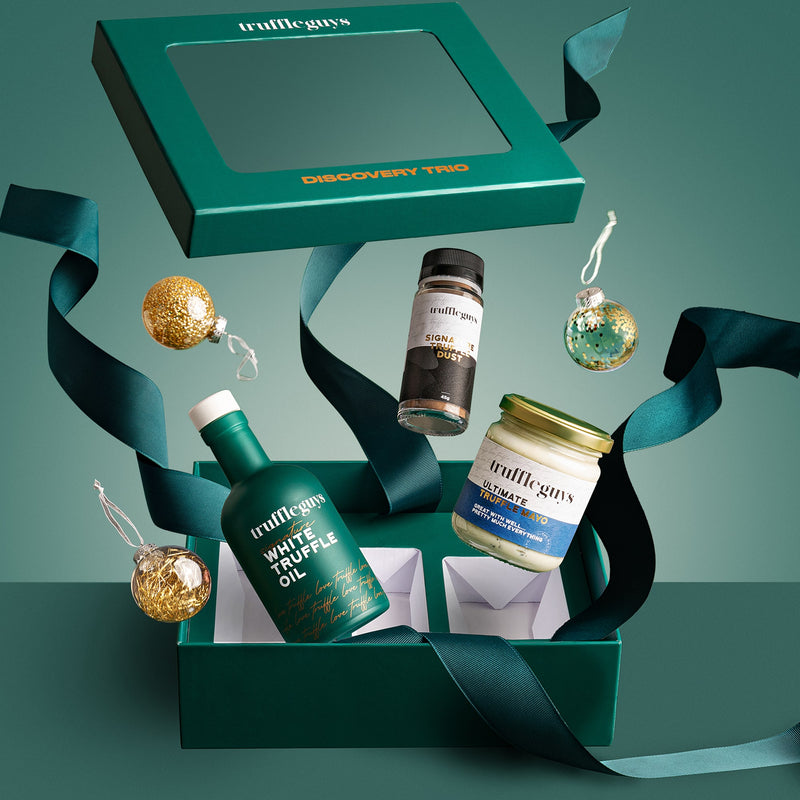
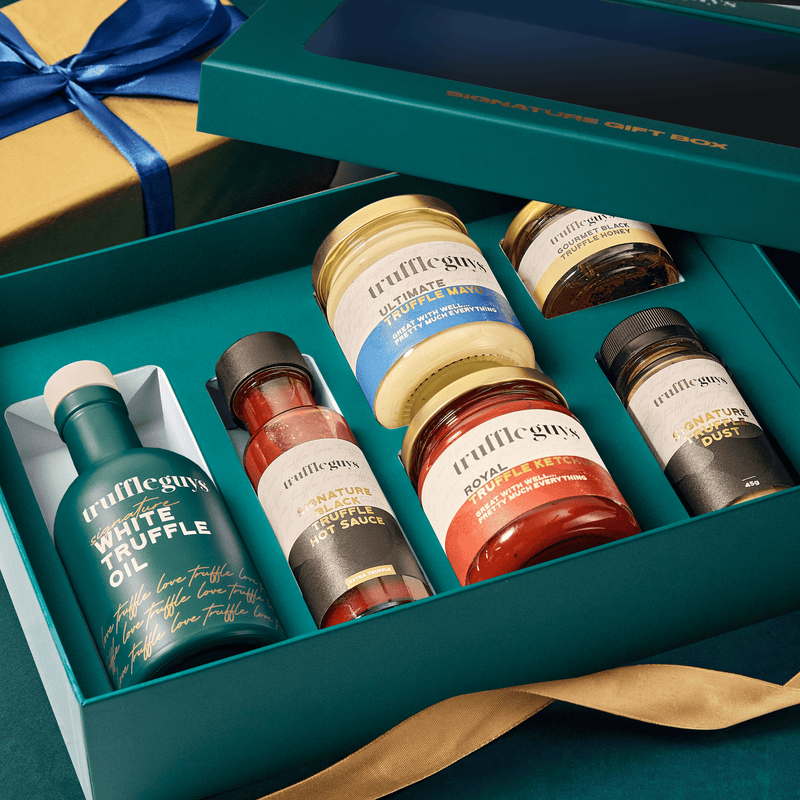
The most flattering introduction is Signature Truffle Dust: shake it over hot buttered toast and the perfume blooms instantly, summoning a Tuscan trattoria into your kitchen and, usually, a curious housemate. For something more transporting, a few drops of White Truffle Oil over a soft-boiled egg or warm pasta conjures, in seconds, the smell that haunts Piedmont every November, for under twenty pounds. The Truffle Starter Pack bundles all three.
You’ll know within seconds whether you’ve been recruited. Most people are. The Romans called the truffle cibus deorum, food of the gods, and on balance, they weren’t exaggerating.